Quick answer:
IHOP menu items range widely in calories, from lighter options around 300-400 calories (a side egg plate or oatmeal bowl) up to 1,200+ calories for the heaviest combo platters and stacked pancake orders. Toppings, syrup, and butter add up fast, often more than the base dish itself.
Ordering breakfast out doesn't have to mean flying blind on calories. If you're trying to keep some kind of handle on what you're eating, checking the IHOP nutrition menu and reviewing the official nutrition facts before ordering is a smart move. While a restaurant breakfast can carry high calories, plenty of items are more reasonable than their reputation suggests once you look at the numbers.
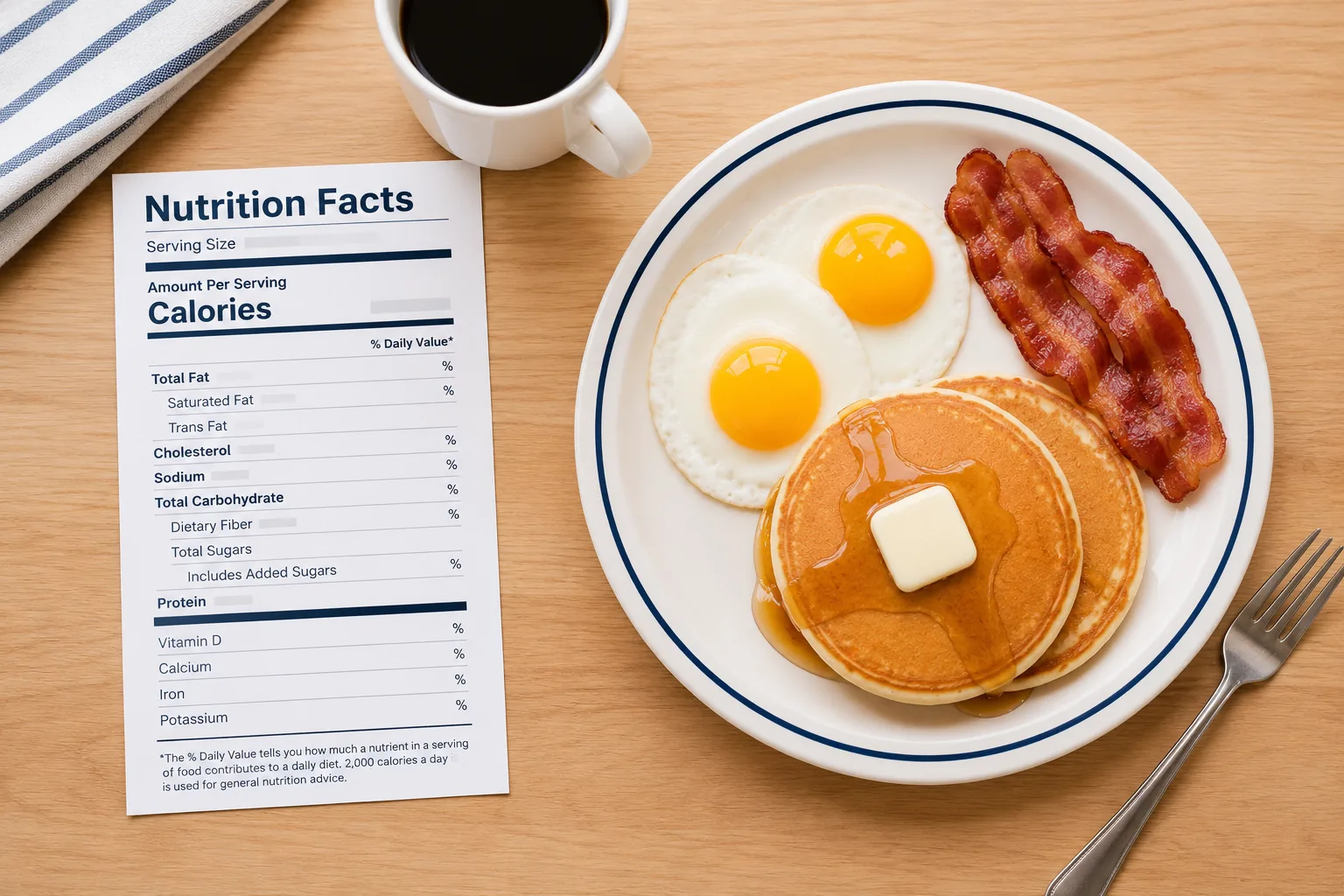
How Many Calories Are in IHOP's Most Popular Items?
| Menu Item | Price | Calories |
|---|---|---|
| Original Buttermilk Pancakes (full stack, no syrup) | 590 | |
| Original Buttermilk Pancakes (with syrup and butter) | 850+ | |
| 2x2x2 Combo | 690 | |
| Breakfast Sampler | 1,160 | |
| Big Steak Omelette | 920 | |
| Belgian Waffle (with toppings) | 700 | |
| Classic Eggs Breakfast | 410 | |
| Cinn-A-Stack Pancakes | 1,030 | |
| Oatmeal Bowl | 330 | |
| Classic Steakburger | 870 |
These numbers are approximate and pulled from publicly available nutrition data where IHOP publishes it, alongside reasonable estimates for items where regional or seasonal variation makes an exact figure harder to pin down. For the most precise, current figures, especially if you're managing a specific medical condition, check IHOP's official nutrition and allergen page, which includes an interactive calculator covering the full menu.
Why the Same IHOP Dish Can Vary in Calories
A few things move the number more than people expect. Syrup and butter portions aren't always standardized exactly the same way at every location, and a generous hand with either can add 150-300 calories to a stack of pancakes that looked identical to the one on the menu photo. Side swaps matter too, hash browns and fruit aren't remotely close in calorie count, so a single substitution on a combo plate can shift the total by a meaningful margin. And realistically, exact recipes occasionally get small tweaks over time as IHOP adjusts suppliers or ingredient ratios, which is part of why published nutrition figures get updated periodically rather than staying frozen forever.
Lower-Calorie Options on the IHOP Menu Worth Knowing
If you're trying to eat lighter without giving up the IHOP experience entirely, a few moves consistently help, and they line up with general guidance from sources like the USDA's Dietary Guidelines on balancing larger meals with lighter substitutions rather than cutting entire food groups:
- Order a short stack instead of the full five-pancake order, cutting calories roughly in half on the pancake portion alone
- Ask for egg whites on omelettes and egg plates, trimming a meaningful chunk of calories and fat without much flavor difference
- Swap hash browns for fruit, one of the easiest single substitutions for cutting calories on a combo plate
- Go light on syrup and butter, or ask for them on the side so you control the amount rather than the kitchen's default pour
- Pick the Classic Eggs Breakfast or Oatmeal Bowl when you want something genuinely lighter rather than just a smaller version of a heavy dish

What About IHOP's Monster Burger?
The Monster Burger deserves its own mention since it's become something of a talking point online for exactly the reason you'd expect, it's a genuinely heavy item. Stacked with multiple beef patties and toppings, it lands well above 1,000 calories on its own, before fries or any side even enters the picture. It's not a secret or a gotcha, IHOP markets it as the bigger, indulgent option on the burger menu, but it's worth knowing the actual number going in rather than being surprised by it after the fact. If you're ordering it, treating it as a once-in-a-while meal rather than a regular order is the practical takeaway most people land on once they see the figure.
Does IHOP Have a Calorie Calculator?
Yes, actually. IHOP runs its own interactive nutrition calculator directly on its official site, letting you select a menu item and customize sides, swaps, and add-ons while the calorie and allergen totals update in real time. It's genuinely the most accurate source for exact figures, since it accounts for customization in a way a static printed menu can't.
The catch is that fewer people actually use it than you'd expect, mostly because it's not always front and center in the ordering flow, especially for guests ordering at the table rather than online. The bigger practical challenge isn't that the information doesn't exist, it's that customization, extra syrup, side swaps, added toppings, can shift the number enough that a quick guess based on the base menu item won't match what you actually ordered. If precision matters to you, running your specific plate through the official calculator before you order takes a couple of minutes and beats estimating.
Use Our Interactive Calorie Estimator
To make this easier, this page includes a simple interactive tool below where you can select a base dish and common add-ons or swaps, like extra syrup, a side substitution, or egg whites, and see an estimated running total update as you go. It won't replace IHOP's own published figures for precision, but it's built to give you a faster, more realistic number than eyeballing a printed menu, especially once you start customizing beyond the base order. Think of it as a rough guide for planning, not a clinical measurement, actual values can still shift slightly by location.
Gluten-Free and Allergen Considerations
Calorie counts aside, guests managing gluten sensitivity or other allergens should know that calorie figures and allergen information are tracked separately, a lower-calorie item isn't automatically allergen-friendly and vice versa. For a full breakdown of what's safe to order under common dietary restrictions, our gluten-free and allergen menu guide covers that side of things in more detail.